
In athletics, it’s common to hear coaches and administrators talk about how important mental health is for their athletes. And that’s a great start. But the real difference comes when that commitment shows up in everyday actions, resources, and department culture. One AD we work with recently commented, “we know that there is a need but the real question is, ‘what is everyone doing about it’?”
Supporting athlete mental health isn’t just about having an athletic counselor or sport psychologist available. Instead, it’s about making sure those professionals have the tools and visibility they need to make a real impact. It’s about weaving mental well-being into the fabric of your program, just like physical training or academic support.
Below, we’ll share seven practical ways coaches and athletic directors can strengthen their support for athlete mental health, turning good intentions into a practical system that helps athletes thrive.
Words vs. Action: Why Visible Investment Matters
Talking about the importance of mental health helps create awareness, but it’s the actions behind those words that athletes truly notice. When support is visible through programming, staffing, and clearly communicated expectations, it signals that mental well-being is a real priority.
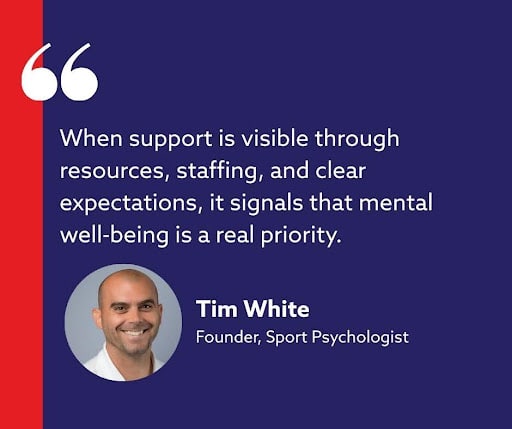
When you don’t follow through, even the best intentions can feel hollow. But when athletes see that their leaders have built systems and provided resources to support mental health, it builds trust. They know their well-being matters just as much as their performance, and that makes them more likely to engage with the support available.
Ultimately, words can start the conversation, but visible investment keeps it going and makes it part of the culture.
7 Ways to Show Real Support for Athlete Mental Health
If you want athletes to know that their mental health is valued, support needs to be built into the daily operations of your athletic program. Here are seven practical ways coaches and athletic directors can move beyond talking about mental health and start showing it through meaningful action.
1. Allocate a Dedicated Budget for Mental Health and Performance Services
A clear budget line for sport psychology and mental health resources communicates that it’s a priority. This can fund licensed professionals, mental performance consultants, workshops, team-building programs, or travel coverage for mental health staff. Without financial backing, even the best ideas can’t take shape.
2. Build a Sport Psychology Team, Not Just One Position
Rather than relying on a single person to meet the needs of an entire department, consider creating a small team of professionals with varied expertise. This allows for broader programming, more individual attention, and better coverage during peak seasons or travel.
3. Give Sport Psychology Staff Autonomy and Access
Support goes beyond hiring. It’s about empowering staff to do their jobs effectively. Give mental health professionals their own budget authority, access to department-wide communications, and the freedom to design initiatives without unnecessary barriers.
4. Integrate Mental Health Into the Core Athletic Schedule
When mental health activities are part of the regular training calendar, they stop feeling like an optional add-on. Consider making certain workshops, check-ins, or team sessions a standard part of the year, just like preseason meetings or weight training.
5. Require Attendance for Key Mental Health Programming
Encouraging participation is good, but requiring it shows you value it as much as any other essential training. Mandatory sessions ensure all athletes benefit from the information being shared and help reduce stigma around seeking mental health support.
6. Make Support Easy to Access and Confidential
Athletes should know exactly how to reach mental health professionals and feel confident doing so. Offer flexible hours, including evenings and weekends, and make sure communication channels are private and clear.
7. Recognize and Support Staff Who Champion Mental Health
Coaches and staff who actively promote mental well-being set an example for others. Publicly acknowledge their efforts and create incentives for integrating mental health awareness into their work.
Implementing these steps will allow mental health to become part of the everyday fabric of your athletic department, not just something you talk about during awareness month.
The Power of Requiring vs. Encouraging
There’s a clear difference between encouraging something and making it a requirement, and athletes notice it. Encouragement sends the message that participation is optional, while a requirement communicates that it’s essential.
Think about film review or team meetings: these aren’t “suggested” activities, they’re built into the schedule because they’re critical for success. Mental health programming can be treated the same way. When certain workshops or training sessions are required, it tells athletes, “This is just as important as your physical preparation.”
Making mental health initiatives part of the official expectations helps normalize participation and removes the stigma of “only going if you’re struggling.” It ensures everyone, from starters to the last athlete on the roster, has the same access to tools that build mental resilience and support well-being.
Long-Term Benefits of Genuine Support
When mental health is supported in consistent, meaningful ways, the benefits extend far beyond a single season. Athletes who feel valued develop stronger mental resilience, which not only enhances their performance but also helps them navigate challenges both in and out of competition.
Genuine support can reduce burnout, lower the risk of stress-related injuries, and improve recovery times. Athletes are more likely to stay engaged when they know their well-being is a priority. It also fosters stronger trust between athletes, coaches, and administrators, creating an environment where open communication and mutual respect thrive.
From a program perspective, prioritizing mental health can improve recruitment and retention. Prospective athletes and their families look for programs that take a holistic approach to development, and a visible commitment to mental well-being can be a deciding factor.
These days, investing in mental health isn’t just the right thing to do but a strategy that pays dividends in performance, team culture, and the long-term success of your athletic program.
Your Next Step in Supporting Athlete Well-Being
Supporting athlete mental health requires thoughtful action and a culture that treats mental well-being as a core part of athletic success. When leaders invest in policies that make mental health a visible priority, they send a clear message to their athletes: your well-being matters here.
When you put these strategies into practice, you’re helping athletes perform at their best and equipping them with skills they’ll carry long after their playing days are over.
If your program is ready to take the next step in building a sustainable mental health support system, White House Sport Psychology can help. From developing department-wide initiatives to providing tailored sport psychology services, we partner with athletic programs to create environments where athletes can thrive.
Reach out today to learn how we can help you make mental health an integral part of your team’s success.